
We walked through the Harem section of Topkapı Palace on the afternoon of 26 July 2026, with our family. We took photographs and short clips as we went, and wrote notes at each stop. This is not a ticket guide. It is an account of what we saw, in the order we saw it, with our own pictures. For opening days and prices, use our Topkapı Palace visiting guide and our official tickets guide.
About this article: We wrote it after our family visit to the Harem section of Topkapı Palace on 26 July 2026. Every photograph is ours, taken on an iPhone 15 Pro, and we cropped or blurred faces. It records one visit, not an official guide.
What the Harem was
The Harem was the private part of the palace where the sultan’s family lived. The word means a protected, private place, and it is a family home with a strict hierarchy, not the fantasy of Western paintings. Guides quote different totals, and about 300 rooms, corridors, baths and courtyards is a commonly cited figure. The sultan’s mother, the Valide Sultan, stood at the top of that order. The Directorate of National Palaces runs the palace, and the Imperial Harem article gives a general background.
Courtyards, galleries and staircases
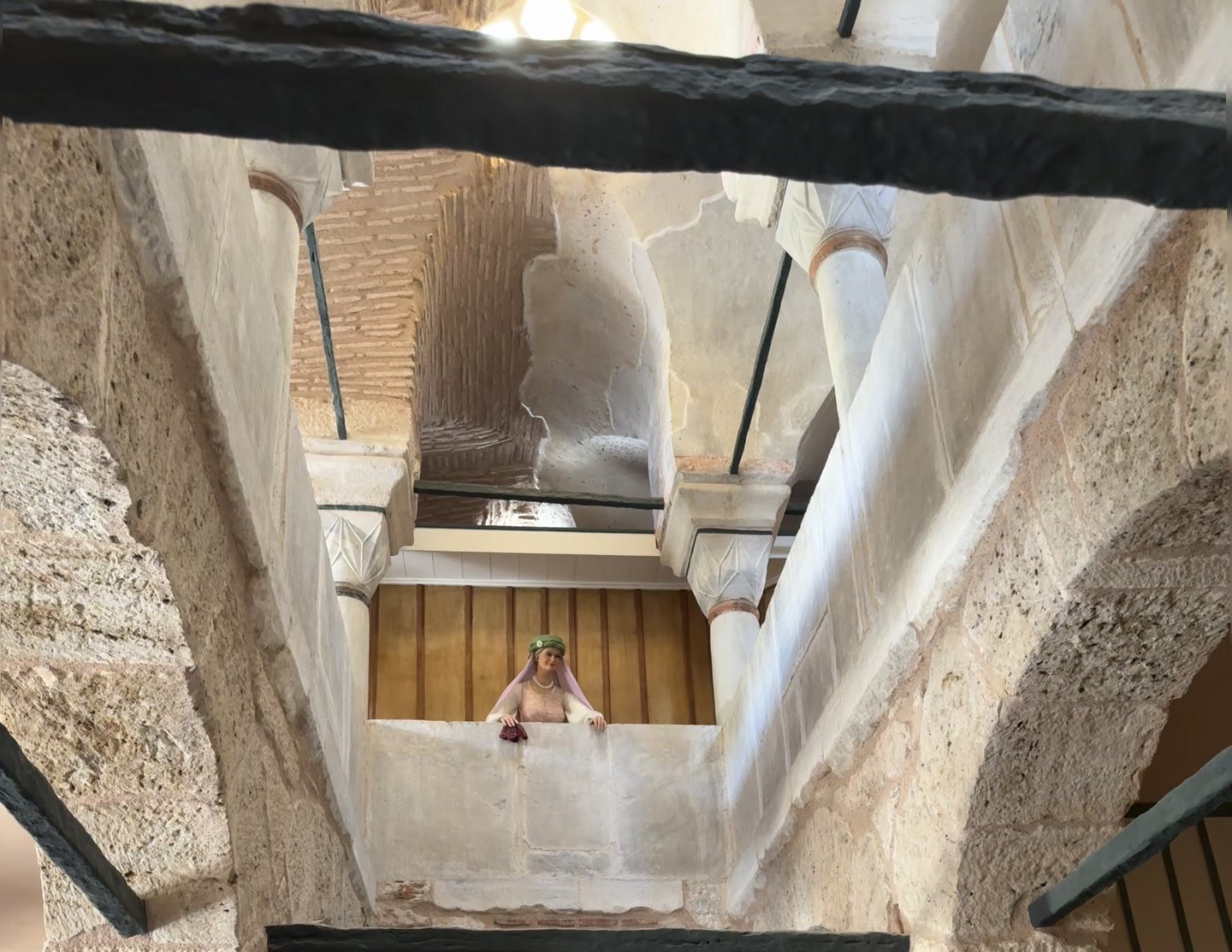
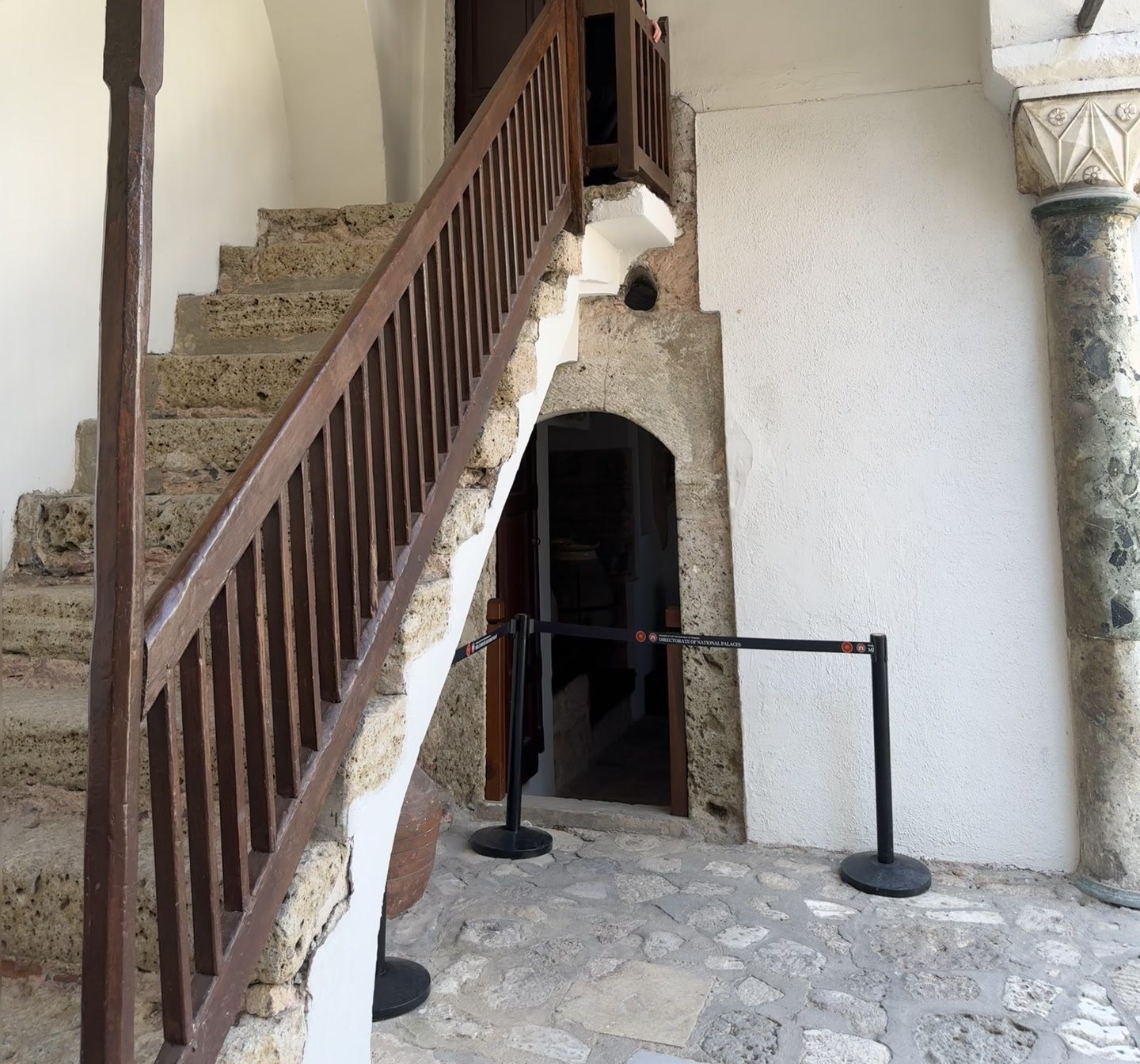
Our notes say that the apartments of the sultan’s consorts, the concubines’ dormitories, the colonnades, shared areas, the baths and the Kuşhane kitchen belong to one group of buildings. In our photos, narrow stone courtyards open onto upper galleries, and wooden staircases lead to doors that visitors do not enter.
Water and silence
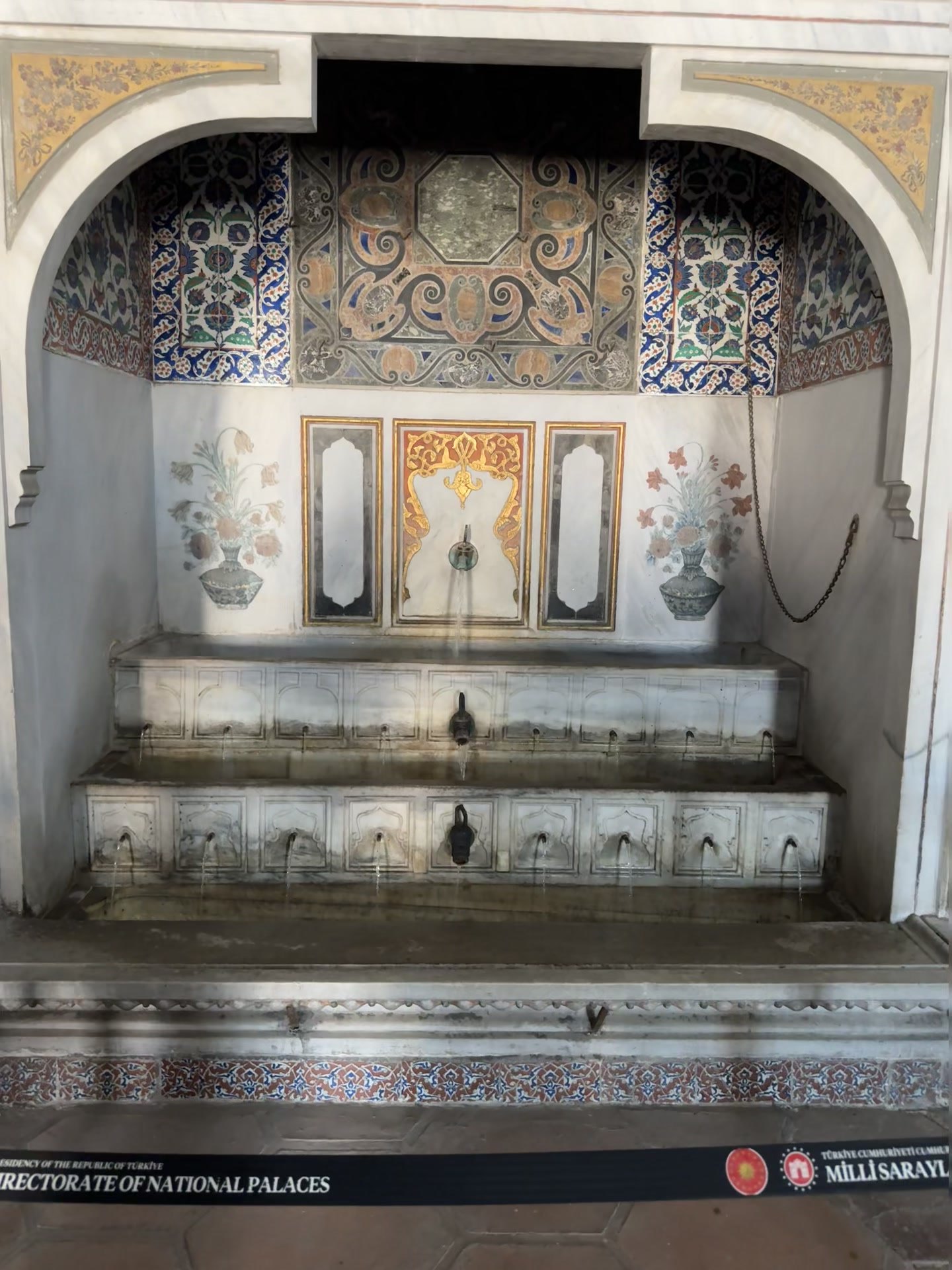
Our notes say that quiet was highly valued in the Harem and that the sound of running water brought a sense of calm. We continued our walk past tile, marble, wall decoration and the sound of water. We cannot point to a document for this, so read it as the explanation we recorded.
The order we walked
The time stamps on our photos record our route. Our first and last pictures are about 40 minutes apart.
| Time (26 July) | What we photographed | Read more |
|---|---|---|
| 15:01 | Iznik tile panel with the tree-of-life design | Iznik tiles |
| 15:08 | Apartments of the consorts and concubines | The women of the Harem |
| 15:11 | A room with a gilded cradle | The women of the Harem |
| 15:15 | A fireplace covered in blue-and-white tiles | Iznik tiles |
| 15:17 | The Valide Sultan’s section | The women of the Harem |
| 15:23 | The Imperial Hall | The Imperial Hall |
| 15:25 | Stained glass and a wall fountain | Stained glass and mother-of-pearl |
| 15:27 | A mother-of-pearl door | Stained glass and mother-of-pearl |
| 15:29 | A wall of sample tiles | Iznik tiles |
| 15:40 | A staircase | The Cevri Kalfa Staircase |
Practical notes from our visit
- Barriers and glass: Many rooms are seen from behind rope barriers or glass, as our photos show. Stand back and look through the opening.
- Light: Interior rooms are dim next to their bright windows. Our phone pictures through glass lost detail, so take a few frames of the same view.
- Crowds: The courtyards and narrow passages had groups of visitors in the afternoon. A few rooms were nearly empty.
- Labels: The signs we read were in Turkish and English.
- Rules: We took photos and short clips with a phone. Rules can change, so follow the signs on the day.
Where to go next
Read on: the Iznik tile panels, the women who lived here, the great hall.
Frequently asked questions
How long did our Harem visit take?
Our photos run from 15:01 to 15:40, so about 40 minutes inside the Harem rooms. We did not read every label, so allow longer if you do.
Can you take photographs in the Harem?
We took photos and short clips with a phone during our visit. Check the signs and any staff instructions on the day, because rules can change.
Is the Harem worth seeing?
We think so. The tile work, the glass and the closed courtyards were the parts we photographed most.
