
The Great Palace Mosaics Museum in Istanbul is closed. The Ministry of Culture and Tourism’s museum directory says it shut for restoration on 9 April 2023 and will stay closed “until the work is completed”. No reopening date has been announced. If you walk through the Arasta Bazaar behind the Blue Mosque looking for it, you will find it shut.
Last checked: 27 November 2026 against the Ministry’s museum directory. One other Ministry page still shows opening hours and a €10 ticket with no closure notice. We trust the directory, because it carries the dated notice.
Is the Great Palace Mosaics Museum open?
No. It has been closed for more than three and a half years. We found no official statement on how far the restoration has got, and no date. Several travel sites still list hours and prices as if nothing had changed, so do not plan a morning around it.
We will update this page when the Ministry announces a reopening. Until then, the rest of this guide explains what is behind that door, so you can decide whether it belongs on a later trip, and where to see Byzantine mosaics in Istanbul right now.
What the museum holds
Most mosaic museums bring the mosaics to the building. Here the building was put up over the mosaic. The floor lies where it was laid, in a colonnaded courtyard of the Great Palace, the residence of the Byzantine emperors. The palace covered the slope between the Hippodrome and the sea. Almost nothing of it stands above ground today, which makes this pavement one of the few places where you can look at the palace itself.
British archaeologists from the University of St Andrews found the courtyard in digs between 1935 and 1938, and again from 1951 to 1954. According to Wikipedia, the courtyard measured about 1,872 square metres. The Ministry says only about 180 square metres of mosaic was uncovered. Austrian and Turkish teams conserved it between 1983 and 1997. The museum has been a unit of the Hagia Sophia Museum since 1979.
Why people who have seen it remember it
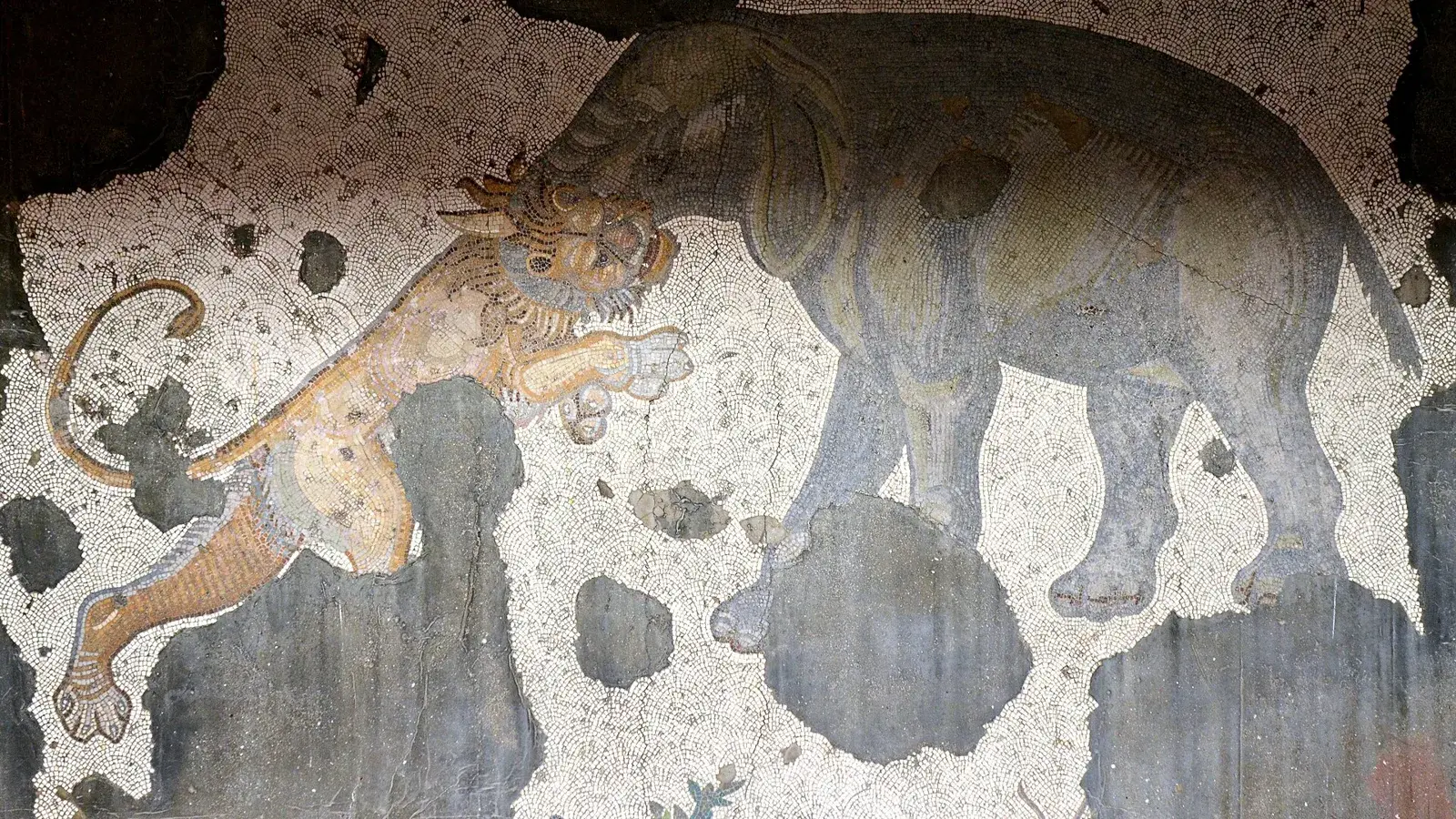
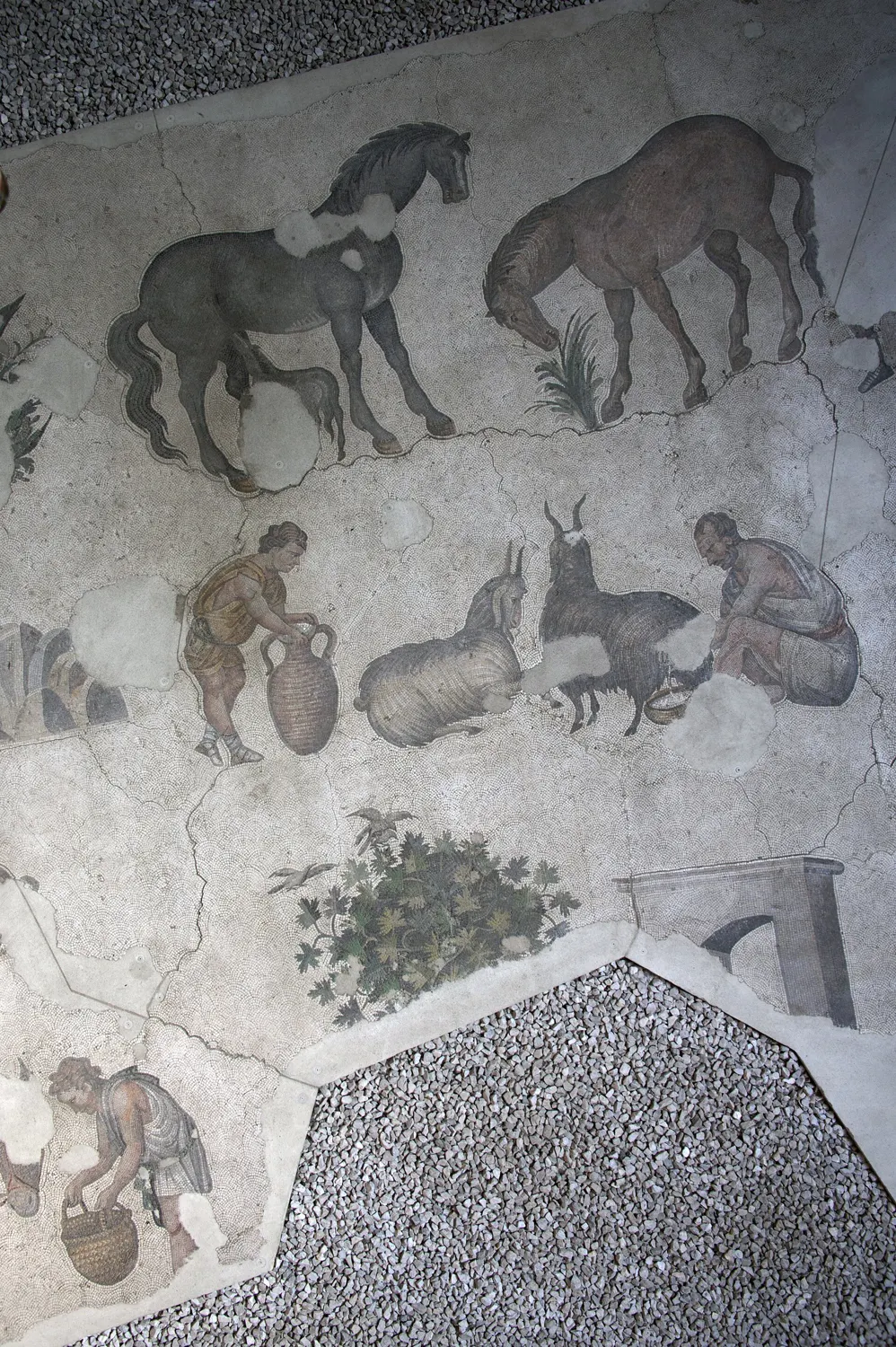
There is not a saint or an emperor anywhere on this floor. That is the surprise. Byzantine art in Istanbul usually means gold backgrounds and holy figures. This is the other side of the same world: hunters, farm animals, children at play and beasts tearing into each other.
- A lion fights an elephant.
- A griffin eats a lizard.
- A hunter faces a tiger.
- A man milks a goat.
- Children ride a camel.
The Ministry dates the mosaics to between 450 and 550 AD. Scholars still argue about the exact reign. The stones are tiny, about 5 mm on average, and that is why the animals have shading and muscle and do not look like flat patterns.
Where it is
The museum sits inside the Arasta Bazaar, the row of shops on the south-east side of the Blue Mosque. The bazaar is part of the mosque complex. From the Sultanahmet tram stop it is a short walk across the square. The bazaar is a shopping street in its own right.
Where to see Byzantine mosaics in Istanbul instead
None of these is a substitute for a palace floor, but each is open and each has mosaics worth the trip.
- Kariye (Chora). The finest late Byzantine mosaics in the city, on walls and domes. It works as a mosque now, with visiting rules for tourists. See our Kariye visiting guide.
- Hagia Sophia. The upper gallery has the famous imperial and Deesis panels. Entry rules for foreign visitors are in our Hagia Sophia ticket guide.
- Istanbul Archaeology Museums. Not a mosaic museum, but the best place for everything else that came out of the ground in Constantinople. Read what has reopened there.
If the Great Palace is what interests you, two more stops help you picture it. The Basilica Cistern stored water for the palace quarter. And archaeologists have recently exposed a Roman street under Hagia Sophia, a few minutes’ walk away.
Frequently asked questions
When will the Great Palace Mosaics Museum reopen?
No date has been announced. The official notice only says the museum is closed until the restoration work is completed.
Why is the Great Palace Mosaics Museum closed?
For restoration. The Ministry’s directory gives 9 April 2023 as the first day of the closure.
Can I see the mosaics from outside?
We found nothing that says so, and we would not count on it. The floor is inside the museum building.
How old are the Great Palace mosaics?
About 1,500 years. The Ministry dates them to between 450 and 550 AD.
Image credits: elephant and lion mosaic by Carole Raddato, Wikimedia Commons, CC BY-SA 2.0, cropped. Goat-milking scene by Dosseman, Wikimedia Commons, CC BY-SA 4.0, resized.
