
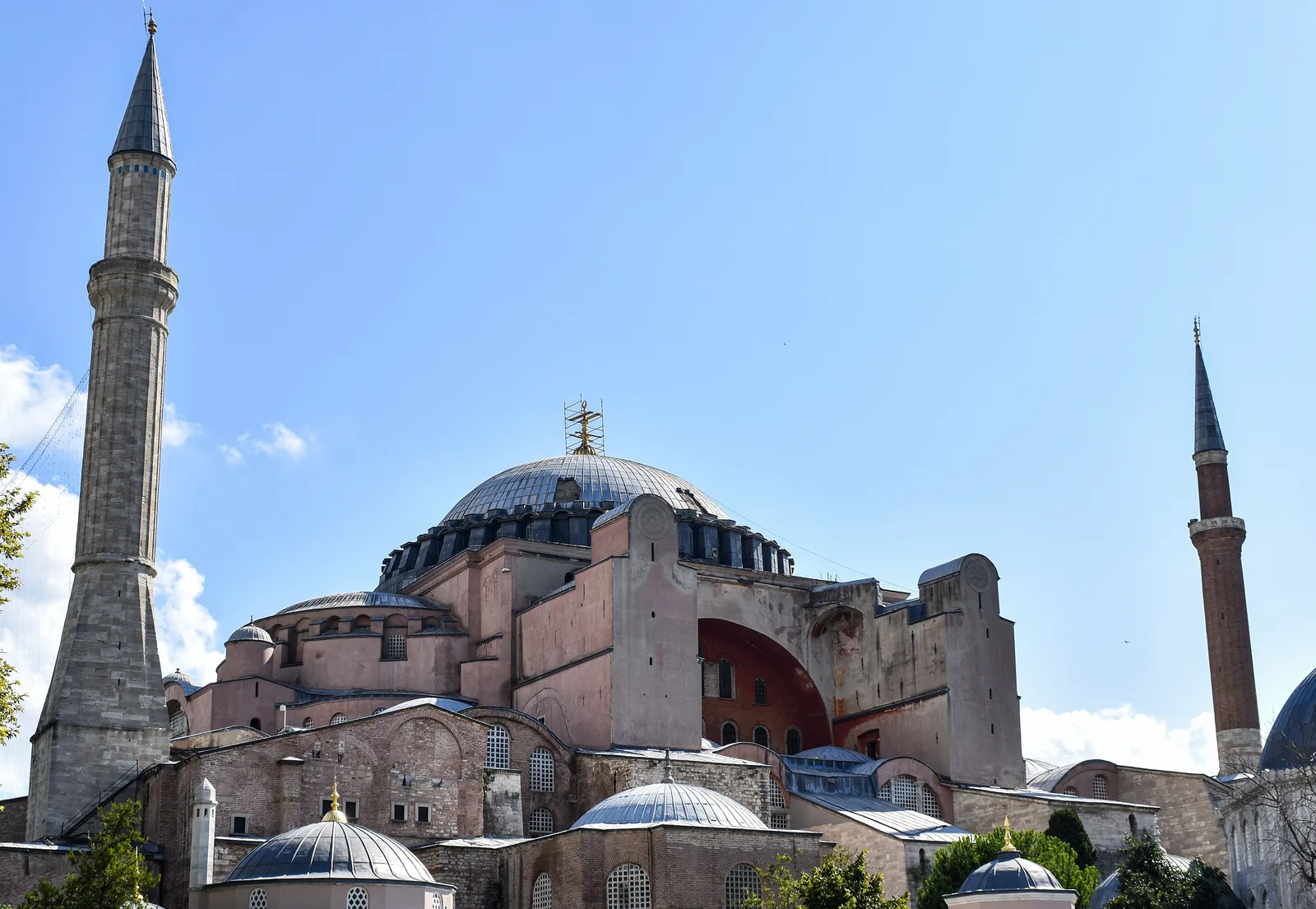
Work on the Hagia Sophia underground tunnels has reached a new stage. Restoration teams have now cleared 420 metres of passages beneath the gardens around the building. Turkey’s culture minister says some of these spaces should one day open to visitors. Here is what the teams found, what is still uncertain, and what it means for your visit.
Last checked: 26 November 2026, against reports in Hürriyet Daily News (21 November 2026) and 3 November 2026, both quoting Culture and Tourism Minister Mehmet Nuri Ersoy.
Can you visit the Hagia Sophia underground tunnels?
Not yet. The ministry has not announced an opening date, a ticket or a route. The minister said only that it plans an exhibition project for suitable underground sections. Preservation and visitor safety come first. Earlier, he said that scientific assessments and safety requirements would decide which sections could open at all.
So treat any tour that promises a visit to the tunnels beneath Hagia Sophia with suspicion. The spaces are an active restoration site. Your visit today works as before. See our guide to Hagia Sophia tickets for foreign visitors for the current entry arrangements.
What the restoration teams have found
The cleaning has focused on two areas just outside the main building, known as the Vezir Garden and the West Garden. According to the ministry figures reported on 21 November 2026:
| Item | What was reported |
|---|---|
| Material removed | Nearly 3,000 tonnes of fill, mud and debris, taken out since February 2025 |
| West Garden | Six separate spaces and nine tunnels. Seven tunnels cleared of earth, the other two documented |
| Total cleared length | 420 metres of tunnels |
| Longest passage | Tunnel 4, 180 metres, running parallel to the entrance facade from in front of the Fatih Madrasa towards the visitor entrance |
| Vezir Garden | A hypogeum (an underground burial structure), main chamber about 8 × 8 metres, excavation completed |
| Hypogeum channels | Two channels lead east and west. The eastern one, about 25 metres long, is cleared. Work continues on the western one |
Teams have also repaired damaged vaults and reinforced parts of the tunnels with stainless steel supports. The minister also gave a technical detail that matters for the building itself. The existing underground air outlet provides only 3.6 percent of the minimum airflow the building needs.
What were the tunnels for?
Nobody is claiming secret escape routes. The working explanation is plain infrastructure. The minister described systems for rainwater drainage and water distribution. Some passages are large enough for a person to walk through. Researchers think Tunnel 4 may have connected to a historic Roman road. However, they say they need more work to establish its original function.
Professor Hasan Fırat Diker sits on the Hagia Sophia Scientific Committee. He told Daily Sabah in June 2025 that many of the narrower passages once held terracotta water pipes. They served for maintenance and ventilation, and some were so tight that workers had to crawl. In that interview he put the whole network at over a kilometre. That is much longer than the 420 metres cleared so far.
Why the hypogeum is the most interesting find
The four-room burial structure on the northeast side may be older than the present Hagia Sophia, which Emperor Justinian I built between 532 and 537. Officials say the architectural layers there may belong to an earlier period. Professor Diker described a tomb with distinctive two-tone marble flooring. These are early interpretations from the excavation team, not a published dating. Expect the details to change as research continues.
What a future visit might look like
Only general plans exist. In the 2025 interview, Professor Diker named the most likely candidates: the broad chambers under the former courtyard, the corridors next to them and the old tomb. He expected a controlled entry, probably with reservations, to limit crowding in a fragile space. Not every passage will open: many are too narrow or unsafe.
We will update this page when the ministry announces an opening date, a route or a booking method.
Underground Istanbul you can visit today
Curious about what lies under the old city? Three underground spaces near Hagia Sophia are open now:
- The Basilica Cistern, a short walk from Hagia Sophia, with its forest of columns.
- Şerefiye Cistern, smaller and usually quieter.
- The Underground Mosque (Yeraltı Camii) in Karaköy, a low vaulted space across the Golden Horn.
For the building above ground, our Hagia Sophia visiting guide covers what to see inside.
Common questions
Did the work close Hagia Sophia?
No. The reports describe work on the main dome and the eastern semi-dome while the building stays open to worshippers and visitors. On the day, check the official entry page in case staff have screened off a section.
Are the tunnels the same as the Basilica Cistern?
No. The cistern is a separate structure under the street to the southwest. The newly cleared passages lie directly around Hagia Sophia.
Is the 420 metres the whole network?
No. It is the length of the Hagia Sophia underground tunnels cleared so far. Work continues in the Vezir Garden and on two more tunnels in the West Garden.
