
Start this Balat and Fener walking guide where the city changes pace, just above the Golden Horn. The traffic along the Golden Horn slips behind you, the streets start to climb, and suddenly you are looking at a row of old houses painted in soft pink, yellow and blue. A cat may be sleeping on a doorstep. Around the corner, a café has squeezed a few tables onto the pavement. This is the Istanbul that makes people put their phones away for a minute—although plenty of visitors come here specifically to take pictures.
This Balat and Fener walking guide takes you beyond the famous colorful houses. You will find a practical route through two neighboring historic quarters, with churches, steep lanes, coffee stops and advice drawn from travelers who have actually walked the area. Allow around two to three hours for an easy visit, or half a day if you enjoy exploring side streets.
Balat and Fener Walking Guide: Route at a Glance
- Start: Fener waterfront, near the Golden Horn tram stop.
- First stops: Church of St Stephen and the Ecumenical Patriarchate area.
- Climb: Walk toward the red-brick Phanar Greek Orthodox College viewpoint.
- Continue: Follow the neighborhood lanes toward Balat’s colorful houses and cafés.
- Finish: Return downhill to the Golden Horn, or linger over a late lunch.
The route is a loose walking loop rather than a rigid turn-by-turn itinerary. That is deliberate: Balat rewards curiosity, but some of its prettiest streets are steep, cobbled or partly blocked by parked cars. Keep a map open, and do not treat every picturesque doorway as a public attraction.
Balat and Fener Walking Guide: Getting to the Golden Horn
The easiest approach for many visitors is the T5 Eminönü–Alibeyköy tram, which runs along the Golden Horn and serves the Fener and Balat area. If you are starting in Sultanahmet, travel toward Eminönü and connect there. Before leaving, check the latest route information with Metro İstanbul. You can also use our Istanbul transport guide to plan the wider journey.
Starting beside the water has one big advantage: you can ease into the neighborhood before the climbing begins. Look across the Golden Horn, get your bearings and save the cafés for later, when a seat will feel especially welcome.
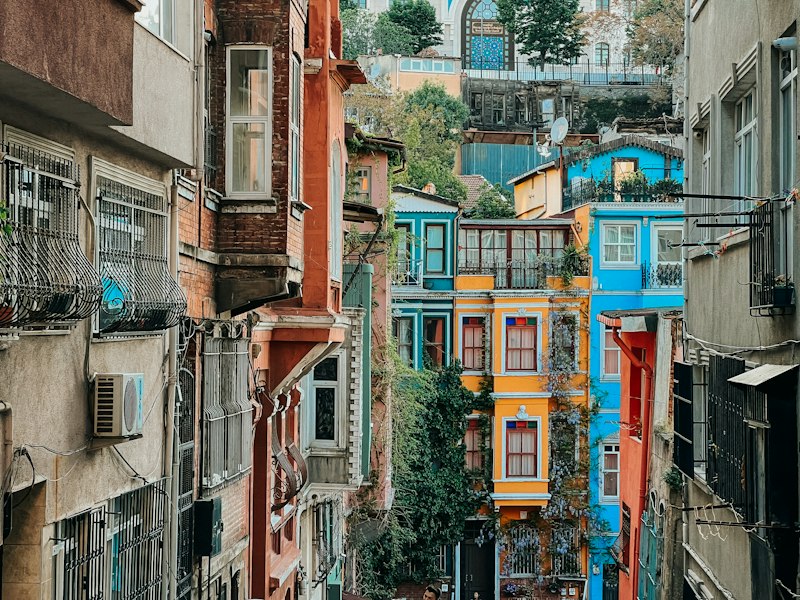
Balat and Fener Walking Guide: The Bulgarian Iron Church
The Church of St Stephen stands close to the waterfront, and it is one of the area’s most unusual landmarks. Its metal structure gives it the nickname Iron Church. You do not need to know the building’s entire history to appreciate its distinctive exterior, but it is worth taking a moment to look at the details rather than rushing to the next photo stop.
It remains a place of worship. Dress respectfully, speak quietly and check the entrance arrangements on the day; religious services and special events can affect visitor access. If the doors are closed, the exterior still makes a worthwhile stop.
Fener Walking Route: The Ecumenical Patriarchate
A short walk brings you toward the Ecumenical Patriarchate and the Church of St George. Fener has deep roots in Istanbul’s Greek Orthodox history, and this corner of the district tells a different story from the colorful-house photographs you may have seen online.
If the church welcomes visitors when you arrive, step inside respectfully and take your time with the interior. However, never assume that every part of the complex is open to tourists. Security checks, worship and access rules may affect your visit. Check for local notices and follow staff instructions.
Fener Walking Guide: The Red-Brick School
Now comes the climb. The imposing red-brick building of Phanar Greek Orthodox College, often called the Red School, rises above Fener’s rooftops. Its towers and brickwork make it one of the neighborhood’s most recognizable sights.
The school is an educational institution, not a casual tourist attraction. Admire it from public streets and viewpoints rather than expecting an interior tour. The streets here can be sharply uphill, so take your time. You will probably stop for the view anyway.
Balat Walking Guide: Colorful Houses and Backstreets
As you wander toward Balat, the neighborhood becomes a patchwork of old timber-fronted houses, renovated façades, everyday shops and small cafés. Some buildings are freshly painted; others show their age. That mix is part of the character. It is a living residential district, not a purpose-built outdoor museum.
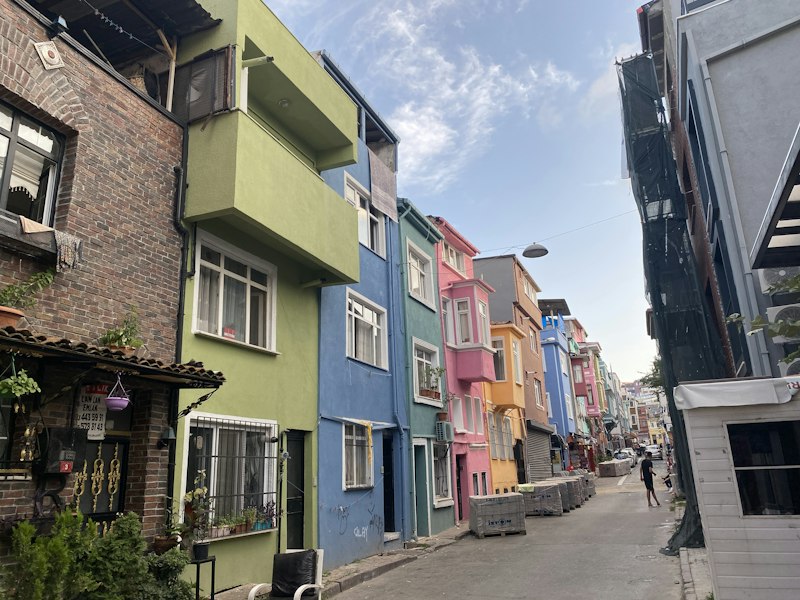
The colorful streets attract photographers, especially around the more recognizable façades and stairways. Go earlier in the day if you want quieter pictures. Better still, take a few turns away from the busiest corners. You may find the street you remember most is one that never appears on a top-ten list.
A small courtesy goes a long way: Keep doorways clear, avoid photographing residents through windows and do not move chairs or personal belongings for a picture. People live behind these photogenic façades.
Balat Walking Route: Cafés and Antique Shops
By this point, you have earned a break. Balat has cafés, antique shops, bakeries and small businesses tucked into its narrow streets. Some lean into the neighborhood’s colorful aesthetic; others feel like ordinary local shops that have been there for years. Neither is inherently better, but prices and menus vary.
Order a Turkish coffee or tea, watch the street for a while and resist the temptation to turn the whole afternoon into a checklist. If you are hungry, look for börek, a simple lunch or a pastry. Our Istanbul street food guide explains what to try elsewhere in the city too.
Balat and Fener Visitor Reviews: What Travelers Notice
Traveler reviews add a useful reality check. On Tripadvisor, recent visitors repeatedly praise the colorful façades, café-lined streets and sense of history. Several say the best part is simply wandering rather than following a strict route. Others point out the steep climbs, worn paving and busy photo spots. These are recurring themes in individual reviews, not a scientific survey of every visitor.
There is also a less flattering side to the feedback. Some travelers find the Instagram-famous stairs underwhelming or crowded and say they would not make a special journey just for one photograph. That is sensible advice: come for the neighborhood as a whole, not a single staircase.
One reviewer who visited in February 2026 described the contrast between restored buildings and everyday residential streets, while a December 2025 visitor noted how abruptly flat roads turn into steep climbs. These observations help explain why the area can be delightful for curious walkers but frustrating for anyone expecting an easy, level stroll. We have paraphrased these public reviews rather than reproducing their wording.
Is Balat Worth Visiting? Who Will Enjoy It Most?
Yes, if you enjoy walking, architecture, small cafés and neighborhoods with layers of history. Balat and Fener are especially rewarding after you have seen the major sights around Sultanahmet and want a different perspective on Istanbul.
Maybe not, if you have very limited time, need a fully step-free route or dislike steep, uneven streets. You can still enjoy the waterfront and a shorter visit without climbing to every viewpoint. But do not build an ambitious walking schedule around these hills if mobility is a concern.
When to Visit: Balat and Fener Walking Guide Tips
A weekday morning is a good bet if you prefer a quieter walk and softer light for photography. On sunny weekends, popular cafés and colorful-house corners can draw crowds. Rain changes the mood, but it also makes steep paving slippery. Wear shoes with reliable grip.
You do not need to visit every church or café for the trip to feel worthwhile. Allow time for a wrong turn, an interesting shop window and an unexpected view of the Golden Horn. That is where this walk becomes memorable.
Balat and Fener Walking Guide: Practical Tips
- Wear comfortable shoes: Expect hills, cobblestones and uneven pavements.
- Carry some cash: Small shops may have different payment preferences; see our cash and card guide.
- Respect worship spaces: Entry and photography rules can change, especially during services.
- Protect residents’ privacy: Do not block doors, steps or narrow lanes for photos.
- Check transport before returning: The T5 tram is useful, but always verify the current timetable.
- Do not rely on fixed café opening hours: Independent businesses can change schedules.
Balat and Fener Walking Guide: Frequently Asked Questions
How long do you need for Balat and Fener?
Plan about two to three hours for a relaxed route with a café stop. If you like churches, photography and antique shops, half a day is easy to fill.
Are Balat and Fener the same neighborhood?
No. They are adjacent historic quarters along the Golden Horn, and visitors often explore them on the same walk. Fener is particularly associated with Greek Orthodox heritage, while Balat has a long history linked to Istanbul’s Jewish community, alongside many other residents and traditions.
Is Balat free to visit?
Walking the public streets costs nothing. Individual attractions, guided tours, cafés and shops may charge fees, and access to religious buildings varies.
Can you visit Balat with a stroller or wheelchair?
Parts of the waterfront are easier than the upper lanes, but the full walking route includes steep gradients and uneven surfaces. Choose a shorter, more accessible route and verify conditions rather than assuming every street is suitable.
Is Balat safe to explore?
Visitors commonly explore during the day, but use the same urban precautions you would elsewhere in Istanbul. Keep valuables secure, watch traffic on narrow streets and take care on slippery slopes.
One Last Reason to Slow Down
The best thing about this Balat and Fener walking guide is that you do not have to follow it perfectly. See the Iron Church, look up at the Red School, then give yourself permission to wander. You may arrive for the colorful houses, but the quieter details—the sound of cups in a café, a faded doorway, a view between rooftops—are often what stay with you.
Visitor information reviewed October 2026. Religious-site access, businesses and transport services can change; check official operators and on-site notices before traveling.
