If you live in Germany, few cities this different are this easy to reach. To visit Istanbul from Germany, you need roughly a three-hour flight and your German ID card, and your phone charger fits the sockets. Once you land, the city’s own story of the Kaiser, German architects and German exiles is out on the street, so this guide pairs ten reasons to go with the German landmarks you can actually see.
Last checked: 13 November 2026. Entry rules come from the German Federal Foreign Office travel advice for Türkiye. Visitor shares come from the Istanbul tourism directorate’s July 2026 report. History dates follow the Wikipedia articles we link below. Rules change, so check the Foreign Office page again before you fly. Diesen Ratgeber gibt es auch auf Deutsch.
Quick facts before you visit Istanbul from Germany
| Question | Short answer |
|---|---|
| Passport or ID card? | Either. The Foreign Office lists the Personalausweis as valid for entry. |
| Visa? | No visa for tourist stays of up to 90 days in any 180 days. |
| Plugs | Type F, the same socket as at home. No adapter needed. |
| Time difference | Türkiye keeps UTC+3 all year: 2 hours ahead of Germany in winter, 1 hour in summer. |
| Currency | Turkish lira. Cards work widely; ATM fees are common. |
| Flight time | About three hours from the large German airports. |
10 reasons to visit Istanbul from Germany
The first four reasons are practical. The other six are places where German history and Istanbul meet.
1. The flight is short enough for a long weekend
Istanbul is roughly three hours from Frankfurt, Munich or Berlin. That makes a Friday-to-Monday trip realistic. Istanbul has two airports, one on each side of the city. Our Istanbul Airport arrival guide explains what to do after landing.
2. Your German ID card is enough
The Foreign Office confirms that German citizens can enter with a passport, a Personalausweis or a children’s passport. It does not recommend the temporary ID card. Türkiye even accepts documents that expired less than a year ago. However, the Foreign Office warns that this can cause trouble on departure or onward travel, so travel with a valid document. Stays follow the 90/180 rule, which our entry requirements guide explains.
3. Your chargers fit the wall
Turkish sockets are Type F, the earthed two-round-pin design used in Germany, at 230 V. Leave the adapter at home. Our plug and voltage guide covers the details for every country.
4. The time change barely touches your sleep
Türkiye stays on UTC+3 all year and does not change its clocks. From late October to late March, Istanbul is two hours ahead of Berlin. In German summer time, the gap is only one hour. You lose no real sleep and can start sightseeing on day one.
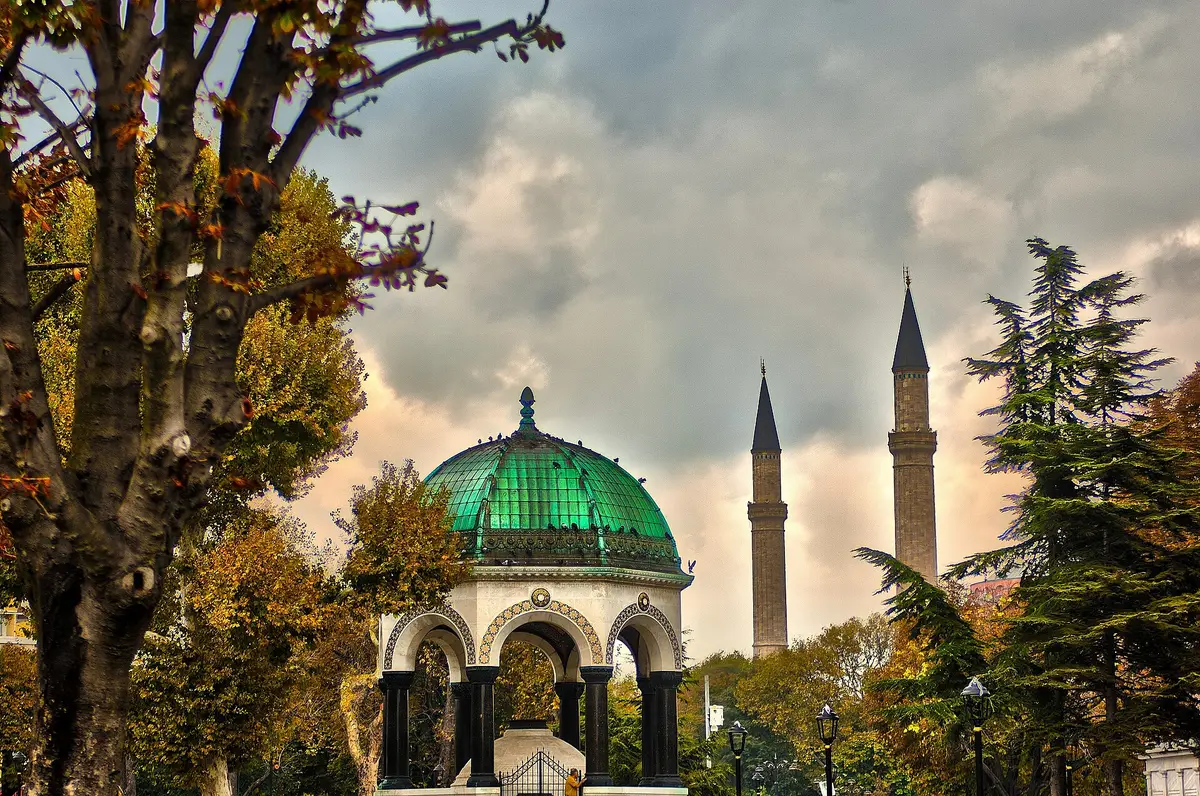
5. The Kaiser’s fountain stands in Sultanahmet
The German Fountain (Alman Çeşmesi) marks Kaiser Wilhelm II’s visit to Istanbul in 1898. Craftsmen built it in Germany, shipped it in pieces and assembled it on the old Hippodrome around 1900. The octagonal dome rests on eight marble columns, and golden mosaics cover the inside. It sits at the north end of Sultanahmet Square, a few steps from the Blue Mosque, and you can see it at any hour for free. The Wikipedia article on the German Fountain tells the full story of the visit.
6. Haydarpaşa, the German-built station on the Asian shore
Haydarpaşa station was the Istanbul end of the Baghdad Railway. Two German architects, Otto Ritter and Helmuth Cuno, designed the neo-classical building. Work began in 1906, and the station opened in 1909. It rests on about 1,100 wooden piles driven into the shore.
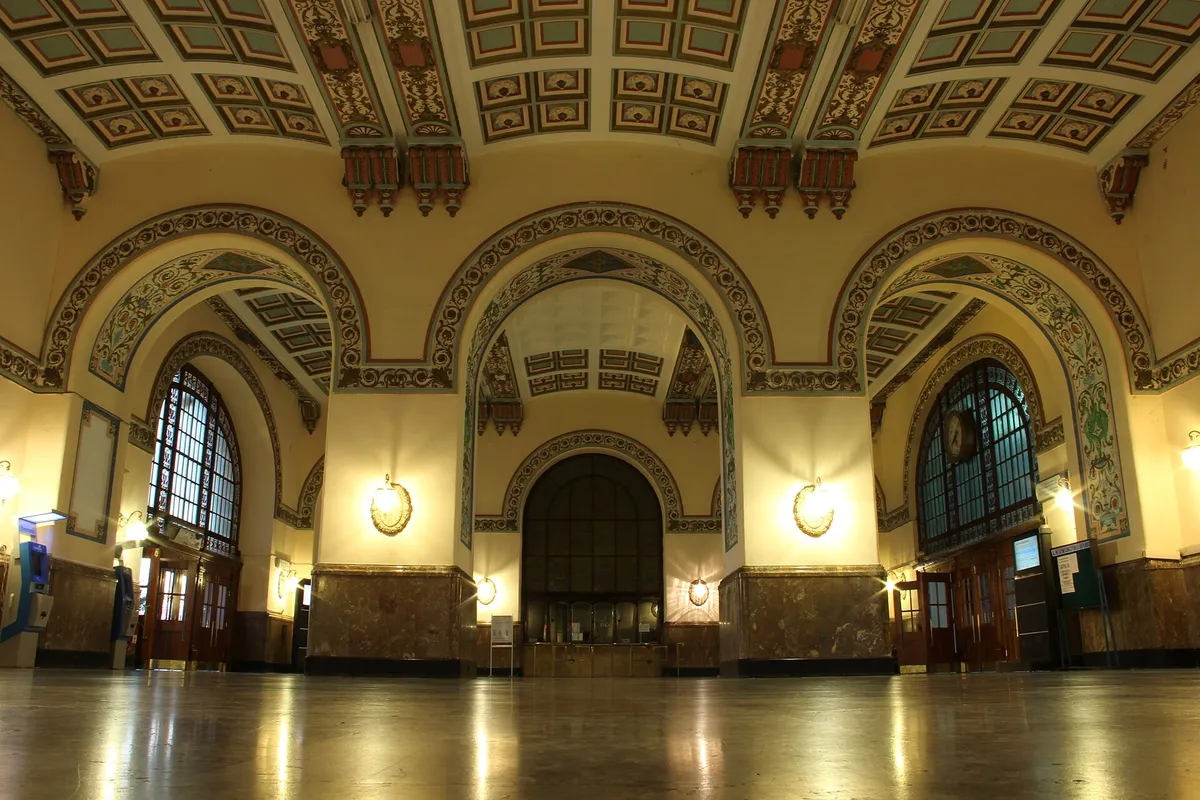
Trains stopped running here years ago, and the building is under a long restoration. In September 2026, Dünya reported that the culture minister targets 2027 for the first phase. Engineers found that only about 200 of the original piles survive. For now, the best view is from a ferry to Kadıköy, which passes right in front of the façade.
7. Sirkeci, where the Orient Express ended
On the European side, Sirkeci station opened in 1890 as the last stop of the Orient Express. Its architect, August Jasmund, was a Prussian who also taught at the city’s polytechnic school. The station building blends European and Ottoman styles. Today the Marmaray platforms run underground, and our Sirkeci station exits guide shows which exit to take.
8. Bruno Taut’s last years in Istanbul
The architect Bruno Taut left Germany and arrived in Türkiye in 1936. He taught architecture at the Academy of Fine Arts in Istanbul and designed school buildings for the education ministry. He also built his own house in Ortaköy. His final work was the catafalque for Atatürk’s state funeral in November 1938. Taut died on 24 December 1938. He lies in the Edirnekapı Martyrs’ Cemetery near the old land walls, as its first and only non-Muslim. The cemetery is an active burial ground, so dress and behave as you would in any graveyard. The Bruno Taut article on Wikipedia lists his Turkish buildings.
9. The scholars who found refuge at Istanbul University
After 1933, Istanbul University took in many academics who fled Nazi Germany. The best known is Erich Auerbach. He chaired Western languages and literatures there from 1936 to 1947 and wrote Mimesis in Istanbul, as the Erich Auerbach article notes. Stand at Beyazıt Square in front of the university’s grand gate, and you are at the place where that exile happened. It is a short walk from the Grand Bazaar.
10. German schools, a Bosphorus residence and Fatih Akın’s Istanbul
The German School of Istanbul (Alman Lisesi) opened in 1868 and still teaches in Beyoğlu. Up the Bosphorus in Tarabya, the former summer residence of the German Embassy now houses the Tarabya Cultural Academy for artists. Both are working institutions, so admire them from outside. For a preview at home, watch Fatih Akın’s 2005 documentary Crossing the Bridge: The Sound of Istanbul. In it, the Hamburg-born director tours the city’s music scene with Alexander Hacke of Einstürzende Neubauten.
A half-day German heritage walk
If you visit Istanbul from Germany for a long weekend, you can join several of these places in one morning. Start at the German Fountain in Sultanahmet. Then walk or take the T1 tram downhill to Sirkeci station and look at the old terminal hall. From there, walk to Eminönü or Karaköy and catch a ferry to Kadıköy. As you approach the Asian side, Haydarpaşa’s towers appear on your left. After landing, have lunch in Kadıköy. Our Istanbulkart and contactless card guide explains how to pay for the tram and ferry.
Money and safety notes from the German Foreign Office
- Most ATMs charge a fee, and German banks do not refund it. Withdraw larger amounts less often.
- Card payments are common. Some shops ask to see your passport or ID card with a credit card.
- The Foreign Office warns about a scam in Beyoğlu. A friendly stranger invites tourists to a venue, and staff then demand a huge bill. Our guide to being overcharged explains what to do.
- The Foreign Office reports cases of German citizens being detained, banned from leaving or refused entry, including people who had travelled before without trouble. Read its full advice before you book, especially if you have close ties to Türkiye.
You will not be the only visitor from Germany
In July 2026, Germany sent 9.25% of Istanbul’s foreign arrivals. Only Russia, at 10.93%, sent more. The figures come from the provincial tourism directorate’s monthly report.
Questions before you visit Istanbul from Germany
Can I enter Türkiye with only my Personalausweis?
Yes. The German Federal Foreign Office lists the regular ID card as a valid entry document for German citizens.
Do I need a visa?
No, not for tourist stays of up to 90 days within 180 days. Citizens of other countries who live in Germany should check our Turkey visa guide.
Can I pay in euros?
Some tourist shops quote euros, but the exchange rate is rarely good. Pay in lira by card, or withdraw lira from a bank ATM.
Can I visit Haydarpaşa station?
Not inside, while the restoration continues. You can see the outside from the Kadıköy ferry or from the Kadıköy waterfront.


