
Some Istanbul landmarks impress you from a distance. The Bulgarian Iron Church Istanbul experience begins differently: you look at its pale façade, notice the golden dome, and then discover that the building is made from metal.
Officially called the Bulgarian St Stephen Church, it stands beside the Golden Horn between Fener and Balat. I would not rush this stop. Give the exterior a few minutes, walk around the garden, and then step inside quietly if the church is open. The visit is compact, yet it adds a wonderful story to a day in this part of Istanbul.
Bulgarian Iron Church Istanbul: the surprise is in the details
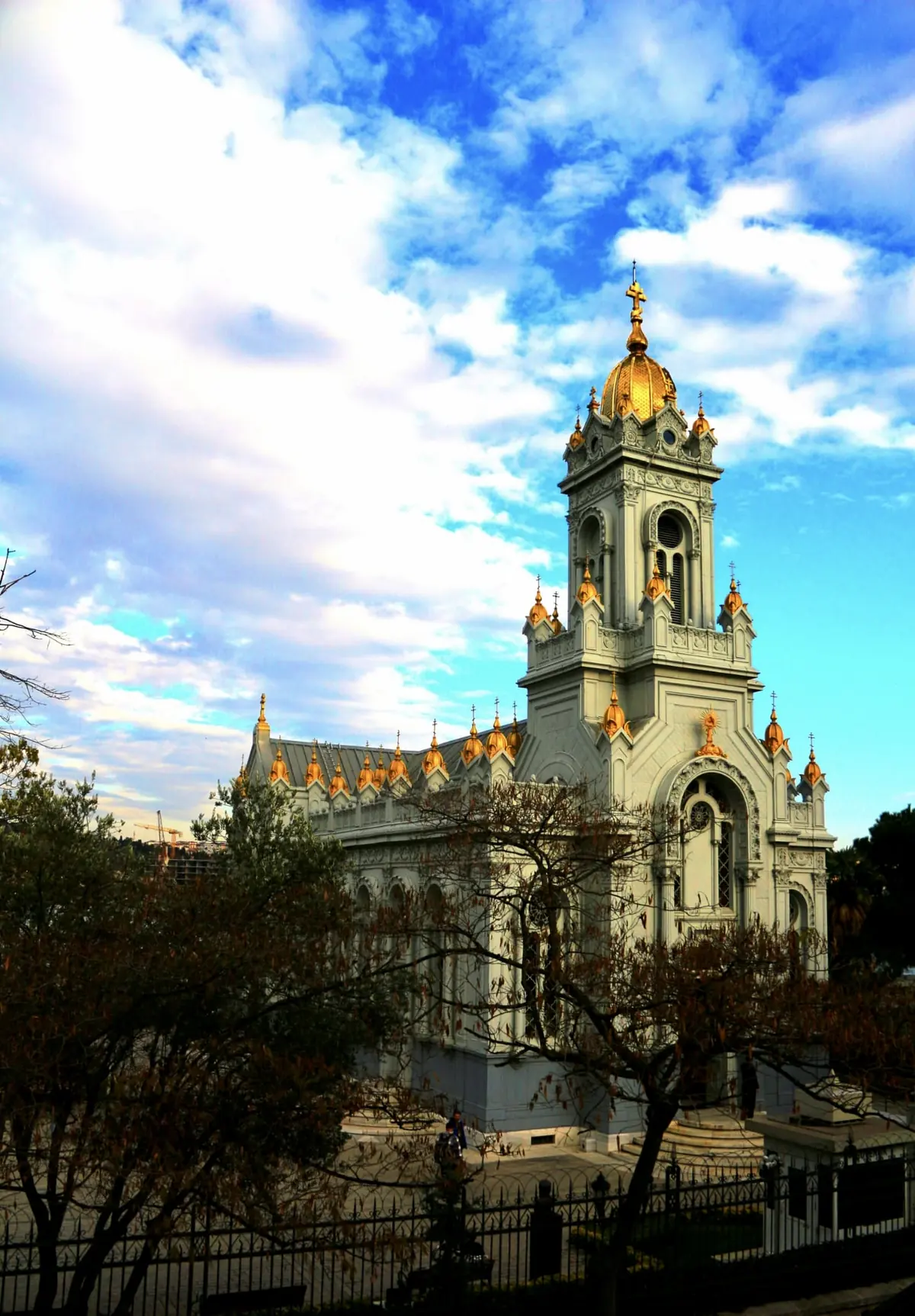
The church is easy to admire even if you know nothing about architecture. Its pointed windows, delicate ornament, pale exterior and gold-topped tower look especially graceful beside the water. However, the most interesting detail is the material itself.
The present church was completed in 1898. Architect Hovsep Aznavur designed it, while the Austrian company R. Ph. Waagner produced its prefabricated iron components in Vienna. About 500 tonnes of parts travelled by ship along the Danube and across the Black Sea before workers assembled them in Istanbul.
That journey gives the building a character of its own. In a city famous for stone mosques, Byzantine walls and wooden Ottoman houses, St Stephen feels like a carefully assembled visitor from another age.
Why was St Stephen built from iron?
The waterside ground presented a practical challenge. A heavy conventional structure was difficult to place here, so the builders chose a lighter prefabricated system. As a result, the engineering solution became the church’s defining feature.
First, workshops made the structural pieces and decorative panels in Vienna. Next, ships carried them to Istanbul. Finally, workers joined the pieces on site with bolts, rivets and other metal connections. The process sounds surprisingly modern, even though it happened in the nineteenth century.
For a reliable historical overview, the city’s official Visit Istanbul page for Bulgarian St Stephen Church is a useful place to start.
What to notice before you walk inside
Do not head straight for the entrance. Instead, walk a short circle around the building. From the waterfront side, the church and Golden Horn create the best overall view. Up close, meanwhile, you can study the repeating metal panels, floral decoration and window frames.
The bell tower deserves a longer look as well. Its vertical shape makes the church appear taller than it first seems. The gold-coloured dome catches the light, so late morning or a clear afternoon can be especially attractive for photographs.
If photography matters to you, keep the church straight rather than tilting your phone sharply upward. Taking a few steps back usually gives the façade more breathing room.
A quieter moment under the stained glass
Inside, the mood changes. The city noise fades, rich colours appear in the windows, and the ornate interior feels warmer than the pale metal exterior suggests. The stained glass can throw vivid patches of colour across the floor when sunlight reaches it.
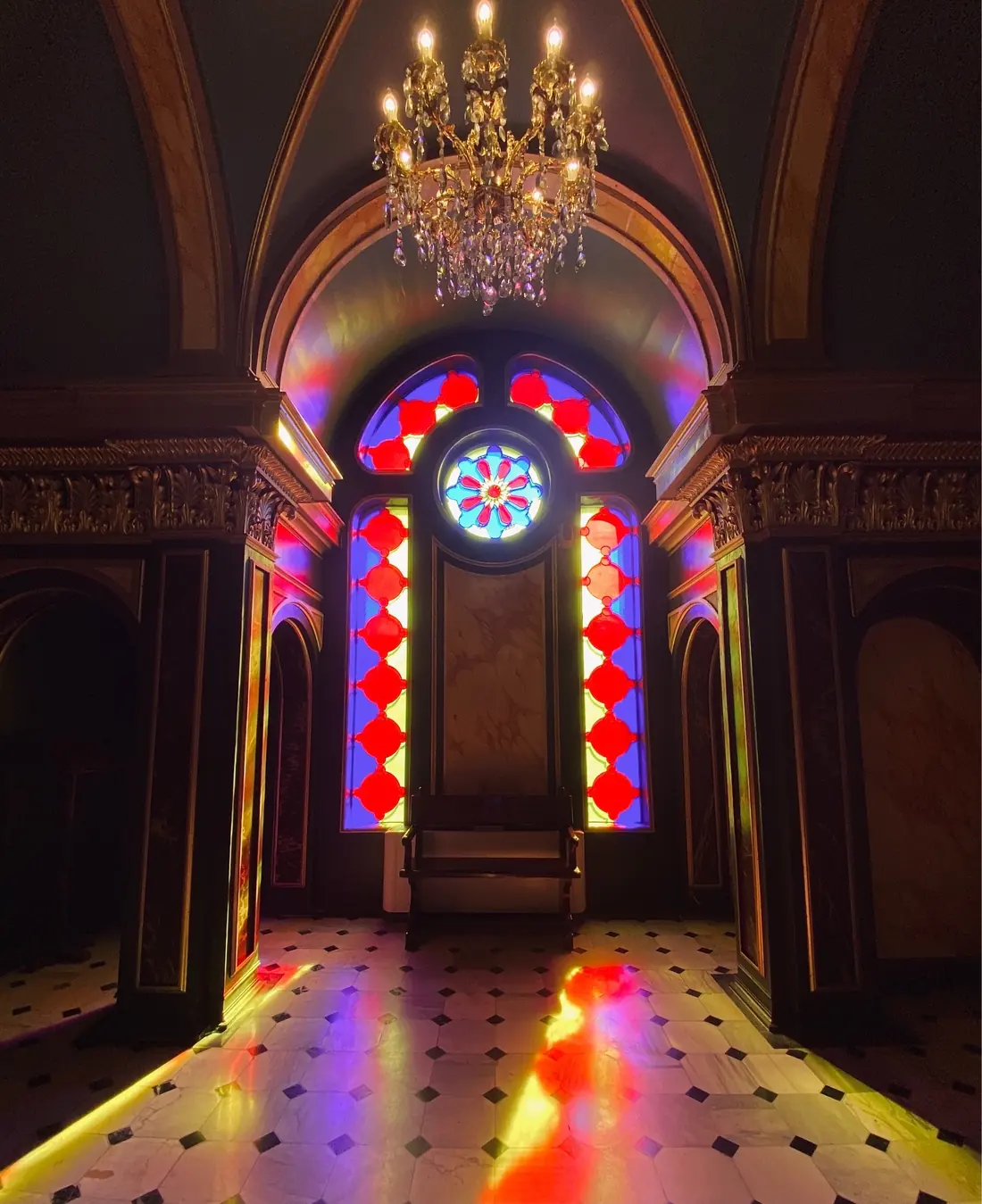
Look toward the iconostasis, chandeliers and arched metal framework. Still, remember that St Stephen is an active Orthodox church rather than a museum set. Speak softly, dress respectfully and avoid photographing worshippers. During a service or ceremony, stay near the back unless a church attendant directs you otherwise.
How to get to the Iron Church
The simplest public transport option for many visitors is the T5 tram along the Golden Horn. Both Fener and Balat stations appear on the official Metro Istanbul T5 line. From either stop, continue on foot along the waterfront toward St Stephen.
A ferry can make the journey more memorable. Check the official Şehir Hatları Balat pier information before leaving, because routes and departure times can change.
If you are coming from Sultanahmet, I would travel to Eminönü first and then use the T5 tram. It keeps the route simple and gives you a pleasant view of the Golden Horn on the way.
Make it part of a Balat and Fener walk
The church works best as one stop in a half-day neighborhood walk. After your visit, continue toward Fener’s historic streets, the waterfront and Balat’s colourful lanes. This approach gives the day a natural rhythm: landmark, neighborhood walk, coffee break and another viewpoint.
Our Balat and Fener walking guide connects these places in a practical order. It also helps you avoid wandering uphill too early, which can save your energy for the most enjoyable streets.
Practical tips for a relaxed visit
- Allow about 30 minutes: that is usually enough for the exterior, garden and a calm look inside.
- Check access before travelling: religious services, ceremonies and special dates may affect visitor entry.
- Choose comfortable shoes: the waterfront is easy, but nearby Balat and Fener include slopes and uneven streets.
- Keep photography respectful: ask before taking interior photographs if staff or worshippers are present.
- Pair it with the neighborhood: the church alone is a short visit; the surrounding walk turns it into a rewarding half-day.
Is the Bulgarian Iron Church worth visiting?
Yes, particularly if you enjoy architecture, waterfront walks or Istanbul’s multicultural history. It does not demand half a day, a complicated reservation or a long detour. Instead, it offers something rarer: a beautiful building with an engineering story that you can understand almost at a glance.
For me, the best part is the contrast. Outside, the church feels precise and almost delicate despite its metal construction. Inside, colour and warm decoration take over. Then, when you step back onto the Golden Horn waterfront, Balat and Fener are ready for the rest of your walk.
